
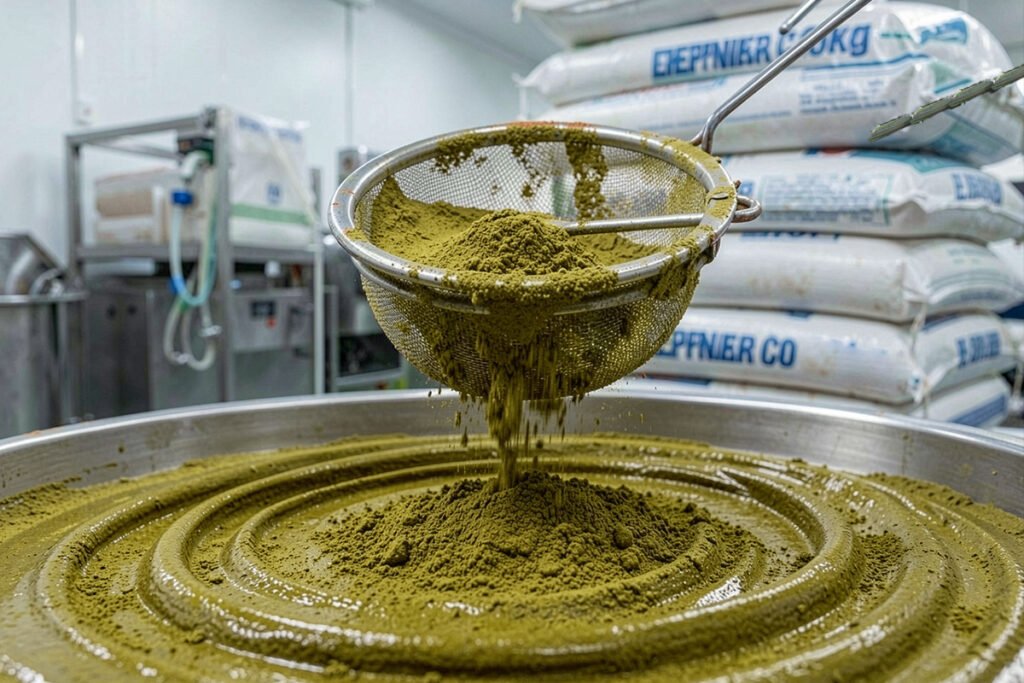
Triple-Sifted Wholesale Henna Powder: The Quality Standard Egypt’s Smart Buyers Ask For
Egypt has a long, deep relationship with henna. From wedding nights in Cairo to everyday hair routines in Alexandria and Luxor, wholesale henna powder has been a market staple for generations. But something has shifted in the last few years. Buyers across Egypt — importers, salon suppliers, and private-label beauty brands — are no longer satisfied with “just henna.” They want to know exactly how it was processed, where it came from, and why one batch stains deep while another barely colors at all.
The answer almost always comes back to sifting.
Egypt’s Henna Market Is Older Than Most People Realize
Egypt has grown and used henna for thousands of years. Ancient Egyptians colored their nails, hair, and skin with it long before it became a global beauty ingredient. Today the country still consumes large volumes — both for personal use and professional salon applications.
But Egypt also imports heavily. Local henna grows in parts of Upper Egypt and Sinai. The volume and consistent quality of commercially grown Indian henna, especially from Rajasthan, is hard to match at scale. That is why Egyptian importers have long sourced wholesale henna powder in India, particularly from the Sojat region, which produces henna with some of the highest natural dye content in the world.
The question is not whether to import from India. Most serious Egyptian buyers already do. The real question is which grade to buy — and that is where triple-sifting changes everything.
What Triple-Sifting Does to the Powder
When henna leaves are harvested, dried, and ground, the raw powder is not uniform. It has coarse bits — fragments of stem, bark, and unprocessed leaf. Some particles are fine. Others feel almost sandy. If that powder goes straight into a bag and ships, every batch behaves differently.
Triple-sifting removes that inconsistency. Each pass through a progressively finer mesh screen pulls out the rough material and leaves only even, smooth powder. By the third pass the texture is silky. It dissolves faster in water, pastes more evenly, and releases dye more consistently across the hair.
For a salon in Cairo mixing wholesale henna powder for hair treatments, that consistency matters every single day. A client who gets a patchy result on Tuesday is not coming back Thursday. Word travels fast in the beauty business — good results and bad ones both.
That is why the best wholesale henna powder suppliers always document their mesh fineness. If a supplier cannot tell you the mesh size, that alone is a red flag worth taking seriously.
The Sojat Factor — Why Indian Henna Dominates Egyptian Imports
Not all henna is equal, and not all Indian henna is equal either. Henna grown in Rajasthan’s Pali district — from the town of Sojat specifically — has a reputation that goes beyond geography. The soil composition and dry climate there produce leaves with lawsone concentrations that consistently outperform other growing regions.
Lawsone is the dye molecule in henna. Higher lawsone percentage means richer color, faster stain, and better staying power on hair. Egyptian buyers who have been sourcing for years know this well. They ask for Sojat-origin henna because they have seen the difference play out in their own salons and in their customers’ responses.
When you combine Sojat origin with triple-sifting, you get a product that practically sells itself — because it performs reliably, batch after batch.
If you are still evaluating suppliers and unsure where to start, this guide on finding reliable henna powder suppliers covers the exact steps experienced buyers follow before committing to a bulk order.
How Kirpal Export Overseas Built a Supply Chain Egyptian Buyers Can Rely On
Kirpal Export Overseas (KEO), founded around 2000 by Mr. Sunil Walia in Rajasthan, India, spent over two decades building the kind of henna supply chain that serious importers need. Vice-President Mrs. Payal Walia has played a key role in the company’s more recent growth, especially in developing export-ready systems for international buyers.
KEO does not buy henna from a middleman and repack it. They work directly with farms in the Sojat region. Buyers can view farm photos on their site. Some have visited in person. That transparency — knowing exactly where the raw material came from and how it was handled — is something Egyptian importers increasingly demand, especially those bringing a product to market under their own brand.
How the Processing Works
KEO’s wholesale henna powder goes through multiple quality checks before it reaches the packaging floor. Moisture content is tested. The dry powder color is verified — fresh, high-quality henna shows a distinct green. Brown or yellow powder usually signals old stock or adulteration. Mesh fineness is confirmed. Each batch ships with a Certificate of Analysis.
That level of documentation is not standard among all Indian exporters. But for Egyptian buyers who import regularly and face GOEIC customs review at Alexandria or Cairo, having that paperwork ready avoids delays that cost real money.
Certifications That Open Doors in Egypt
KEO holds ISO, GMP, and HALAL certifications. In Egypt, where the majority of consumers are Muslim, HALAL certification matters — not just for compliance but for what it says at the point of sale. A beauty product carrying a HALAL mark moves differently on a shelf than one that does not.
ISO and GMP certifications matter for a separate reason. They prove that the production process is controlled and repeatable. When an Egyptian importer tells their retail clients the henna comes from a GMP-certified facility, that carries more weight than a generic “natural” or “organic” claim printed on a packet.
The Private-Label Opportunity for Egyptian Beauty Brands
One of the fastest-growing uses of wholesale henna powder online sourcing in Egypt right now is private-label beauty products. Small to mid-size Egyptian cosmetics brands are launching henna-based hair color lines, and they need a supplier who handles more than raw powder.
KEO offers the full package for OEM and private-label clients:
- Custom packaging design and label printing
- Sample production before bulk commitment
- Active moisture-protective packaging for Red Sea and Suez Canal transit routes
- Full export documentation including phytosanitary certificates and MSDS sheets
For an Egyptian entrepreneur launching a henna hair care brand, that end-to-end service is worth far more than hunting for the cheapest raw material and stitching the rest together independently.
You can also explore how different hair color shades work for different customers with this guide on hair colors by skin undertone — useful context when developing a product range for Egyptian salon clients who serve a wide range of hair types.
What Smart Egyptian Buyers Check Before Placing an Order
Experienced importers in Egypt have developed a short checklist they run through before committing to a wholesale henna powder supplier. It looks roughly like this:
Product quality:
- What is the mesh fineness? (200-mesh is the minimum for premium grade)
- Is it triple-sifted or single-pass?
- What is the lawsone dye content? Can you share lab results?
- What does the dry powder look like? Green means fresh. Brown or yellow is a problem.
- What is the moisture content? Below 10% is the accepted standard.
Supplier reliability:
- Where exactly is the henna sourced from?
- Can you provide a Certificate of Analysis?
- Do you hold ISO, GMP, or HALAL certifications?
- How long have you been exporting to Egypt or the wider MENA region?
- Can I get a sample before committing to a full container?
Commercial terms:
- What is the minimum order quantity?
- Do you offer private-label or OEM services?
- How is moisture protection handled during shipment?
- What is the standard lead time from order confirmation to dispatch?
These questions sound basic. But a lot of buyers skip them when a price looks attractive. The ones who skip them tend to be the ones dealing with complaints a few months later.
For a more detailed look at what quality wholesale henna actually looks like in practice, the resource on quality wholesale henna powder manufacturers is worth reading before you finalize any supplier decision.
Henna and Indigo Together — the Combination Egyptian Salons Rely On
Many Egyptian salons do not use henna alone. They mix it with indigo powder to achieve darker shades. Henna on its own produces red to orange tones. Add indigo and the range opens up to warm brown, dark brown, and near-black depending on the ratio used.
This two-ingredient system is popular in Egypt because it is entirely natural and it works well on the thick, highly pigmented hair types common across North Africa and the Middle East. A lot of salon clients in Cairo and Alexandria specifically request chemical-free coloring — and henna-indigo blends are the answer.
Buyers sourcing from Kirpal Export Overseas can get both powders from the same certified supplier. That keeps quality consistent across both ingredients and cuts down on the logistics headache of managing two separate import relationships.
For anyone curious about the henna plant itself beyond its hair coloring properties, this piece on whether henna leaves are edible gives a useful grounding in what the plant actually is — knowledge that helps retailers answer customer questions confidently.
Practical Notes for Sourcing in Egypt
A few things worth keeping in mind if you are buying wholesale henna powder specifically for the Egyptian market:
- GOEIC documentation matters. Egypt’s General Authority for Export and Import Control requires proper paperwork for cosmetic ingredient imports. A COA and MSDS from your supplier saves significant time at port.
- Seasonal demand spikes are real. Wedding season in Egypt — particularly late spring and autumn — drives sharp increases in henna demand. Buyers who lock in supply agreements ahead of those periods consistently outperform those who scramble for last-minute stock.
- Egyptian consumers know henna. They have used it for generations. A smooth, fine powder that gives deep, consistent color builds loyalty fast. A gritty or uneven product destroys it just as fast. Quality here is not optional.
- HALAL certification is a genuine purchase driver — not just a regulatory formality. Make sure your supplier can provide the actual documentation, not just a verbal assurance.
FAQs
Why does Egypt import henna from India when Egypt grows henna locally? Egypt produces some henna, mostly in Upper Egypt and Sinai. But Indian henna — especially from Sojat — carries higher lawsone dye content and more consistent quality at commercial scale. Most professional importers prefer it for that reason.
What does “triple-sifted” mean on a henna powder label? It means the powder passed through three progressive mesh filters after grinding. Each pass removes coarser particles. The final result is finer, smoother powder that mixes faster and dyes more evenly than single-pass or unsifted product.
How do I find the best wholesale henna powder online from India? Focus on suppliers who list mesh fineness, provide a COA, hold ISO, GMP, and HALAL certifications, and are willing to send samples before bulk orders. Any supplier who avoids documenting their sourcing is worth treating with caution.
Is HALAL-certified henna powder significantly more expensive? Usually only marginally, if at all. The certification mainly affects documentation and production standards — not the raw material cost. For the Egyptian retail market, the minimal cost difference is almost always worth it.
Can I get henna powder in my own brand packaging when ordering wholesale? Yes. Established exporters like KEO offer full OEM and private-label services, including custom printed bags, retail jars, and boxes printed to your specifications.
The Bottom Line
Egypt’s relationship with henna goes back thousands of years. The business of buying and selling wholesale henna powder today, though, looks very different from what it did even a decade ago. Buyers are sharper. Retail consumers are more demanding. And the suppliers who keep winning — year after year — are the ones who treat quality as a built-in process, not a marketing claim.
Triple-sifted powder from a certified, farm-traceable source is not some premium luxury tier. It is quickly becoming what smart Egyptian buyers simply expect. The importers who understood that early are already a step ahead.
For broader research on henna market standards and ingredient sourcing globally, Google’s curated henna overview is a useful reference.
And for an independent look at how herbal hair color products get evaluated by buyers and brands, herbalhaircolors.com covers it well.