
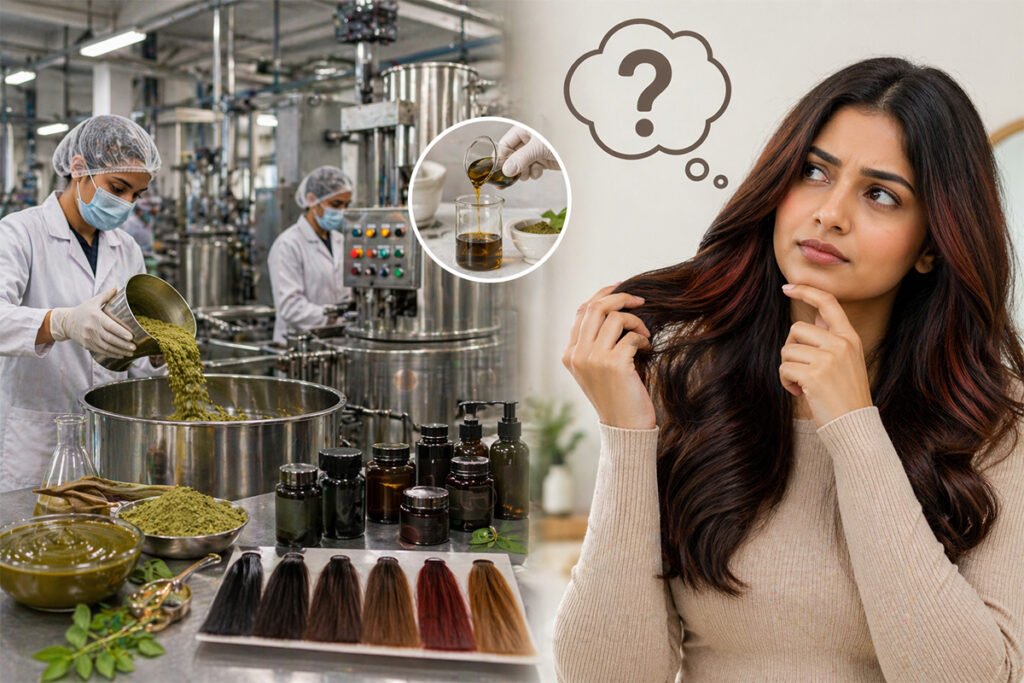
You colored your hair six months ago. Maybe it was a permanent dye. Maybe a semi permanent hair color you picked up at a pharmacy in Guadalajara or CDMX. Either way, the color has faded. Your roots are showing. And now you are wondering whether henna is even an option — or whether mixing it with previously dyed hair is asking for trouble.
It is a fair question. And most hair color manufacturers will not give you a straight answer because the honest answer is complicated.
Here is what is actually going on — and which henna formulas are genuinely safe for color-treated hair in Mexico.
Why Color-Treated Hair and Henna Are a Complicated Combination
Henna works differently from every other hair dye you have probably used. It does not penetrate the hair shaft the way oxidative dyes do. Instead, it coats the outside of each strand — binding tightly to the keratin protein layer and depositing color on top of it.
That sounds gentle. And for virgin, unprocessed hair, it mostly is.
But color-treated hair is different. Chemical dyes — whether permanent or semi permanent hair color — have already altered the hair shaft structure. The cuticle has been opened and closed repeatedly. The protein bonds have been stressed. The hair’s natural porosity has changed.
When henna meets chemically treated hair, unpredictable things can happen. The most common one that catches first-time users completely off guard is the orange root problem.
Grey hair and lighter sections — particularly regrowth near the roots — react more intensely to henna’s lawsone compound than darker, previously dyed lengths. The result is a vivid, uneven orange at the root that nobody warned them about. Understanding this before you apply is the difference between a good result and a frustrating one.
For a broader look at how hair coloring chemistry works across different methods, including why henna behaves so differently from synthetic dyes, that background is worth reading before you start mixing anything.
The Real Problems Consumers in Mexico Face With Henna on Dyed Hair
Before getting into which products work, it is worth being honest about what goes wrong — because most brands will not tell you.
The Black Henna Trap
This is the most dangerous one. Products sold as “Black Henna” — widely available in markets across Mexico, often used for temporary tattoos and sold in some beauty supply stores — are not henna at all. They contain PPD (paraphenylenediamine), the same synthetic colorant found in most commercial permanent hair dye.
PPD causes severe allergic reactions in sensitized individuals. Blistering. Chemical burns. Permanent scarring. The risk is not theoretical — it is well-documented in dermatology literature and in consumer complaint filings across Latin America.
Pure henna does not come in black. If a product is labeled “black henna” and the price is low, it is synthetic. Do not use it on your scalp.
The Dryness and Crunchiness Problem
Pure henna has mild astringent properties. On color-treated hair that is already dry or porous from previous chemical processing, this can make the hair feel straw-like after application. Not damaged — just unpleasant in texture.
The fix is straightforward: deep condition before and after every henna application. Coconut oil applied to the lengths before the henna paste goes on reduces absorption into already-dry sections. A rich conditioning treatment immediately after rinsing restores softness.
This is something good hair color manufacturers who specialize in treated hair account for in their formulas — adding moisturizing herbs like hibiscus and conditioning agents to offset the astringency.
The Color Lock Problem
Here is the one that genuinely catches people off guard. Once henna binds to your hair keratin, it does not let go easily. If you decide you want to go back to chemical color — or try to lighten your hair after a henna application — you are facing a serious problem.
Bleach applied over henna can produce green tints, uneven lifting, and in some cases significant damage. The henna-keratin bond is resistant to the oxidative chemistry that bleach relies on.
This is not a reason to avoid henna. It is a reason to commit to it. If you color your hair with henna, plan to stay with henna — or at least accept that transitioning back to synthetic color will take time and care.
For a detailed look at the 10 things hair dye manufacturers don’t tell consumers, including how chemical formulas interact with natural dyes, that article covers the chemistry in plain language.
What to Look for in a Henna Brand for Color-Treated Hair
Not all henna products are formulated the same way. For color-treated hair specifically, the formulation details matter more than the brand name on the front.
1. Pure Lawsonia Inermis — No Metallic Salts
Metallic salts are sometimes added to henna products to speed up color development or deepen the shade. On color-treated hair, they are particularly dangerous — they react with residual chemicals in the hair shaft and can cause unpredictable results, including heat damage during subsequent styling.
A legitimate hair color manufacturer using pure henna will not add metallic salts. If the ingredient list is vague or the processing time is unusually short (under an hour), that is a warning sign.
2. Indigo Blends for Cooler Tones
Pure henna produces reddish-brown tones. For color-treated hair that was previously brown or black, pure henna alone will produce an orange undertone that looks unnatural against the existing dyed lengths.
A blend with indigo powder corrects this. Indigo shifts the tone toward cooler browns and near-blacks, producing a result that blends more naturally with previously dyed hair. The ratio of henna to indigo determines the final shade — more indigo for darker, cooler results.
3. Herb Additions That Support Treated Hair
The best herbal hair color formulas for color-treated hair include conditioning and scalp-supporting herbs alongside the colorant. Look for:
- Amla — strengthens brittle, chemically stressed hair shafts
- Bhringraj — supports scalp recovery and acts as a hair treatment for hair growth
- Hibiscus — adds shine and counteracts the dryness that henna can cause on porous hair
- Shikakai — gentle cleansing that does not strip already-dry hair further
These are not marketing additions when sourced and formulated correctly. They are functional — and they make the difference between a henna application that leaves color-treated hair feeling worse and one that actually improves its condition.
For guidance on choosing the right shade blend for your specific hair color and skin tone, this breakdown by skin undertone is a practical reference.
Case Study: A Mexico City Salon That Made the Transition
A small salon in Colonia Roma, CDMX — specializing in natural and organic hair care — started offering henna services in 2022 after several regular clients asked for chemical-free alternatives following hair loss concerns.
The first challenge they ran into was exactly the orange root problem. Clients who had been using conventional hair dye for years had varying levels of porosity and color history throughout their hair. The same henna formula produced wildly different results from client to client.
After two months of inconsistent results, the salon owner sourced directly from a certified hair color manufacturer — specifically a supplier offering henna-indigo blends with documented lawsone content and no metallic salts. She also started applying a coconut oil barrier to dry ends before every application.
The results became consistent. The orange root issue was managed by using a lower henna ratio in the root application for clients with significant grey coverage. Clients with previously dyed darker hair got a near-black result from the indigo-heavy blend.
Within six months, the henna service had become the salon’s most requested treatment — driven entirely by word of mouth from clients who had struggled with thinning hair and scalp sensitivity from chemical dyes.
The lesson the salon owner took from the experience: the formula matters, but so does the technique. Henna on color-treated hair is not a one-size-fits-all application. The porosity of the hair, the previous color history, and the grey percentage all affect the outcome — and a good formulation from a trustworthy hair color manufacturer gives you a reliable starting point, not a guaranteed result.
For first-person consumer experience on navigating shade selection, this personal account reflects exactly the kind of trial-and-error most people go through before finding what works.
Hair Mixology: How to Customize Henna for Color-Treated Hair
One of the most popular approaches among henna users in Mexico right now is what the natural beauty community calls “hair mixology” — combining pure henna with other herbs and powders to customize the shade and texture result.
For color-treated hair, these are the most useful combinations:
For dark brown coverage over previously dyed hair: Mix henna and indigo in a 1:2 ratio (more indigo than henna). Apply to pre-oiled hair. Leave for 2–3 hours. The result is a deep, cool brown that blends well over most previously dyed bases.
For grey coverage without orange: Apply a straight henna paste first for 1–2 hours, then follow with a pure indigo application. The two-step method gives grey hair a deep brown-black result without the orange intermediate stage.
For conditioning color on dry, porous hair: Add amla powder to your henna mix. Amla lowers the pH of the paste, which slows down color release and reduces the intensity of the dye on highly porous sections — helping even out results across different porosity levels in the same head of hair.
For more on what genuinely clean herbal hair color looks like from a manufacturer perspective, Herbal Hair Colors covers formulation standards and ingredient transparency in the natural dye space.
Is Henna Safe for Specific Groups?
Does Henna Cause Hair Loss or Damage?
Pure henna does not cause hair loss. In fact, the coating effect can strengthen fragile strands and reduce breakage in already-damaged hair. The confusion comes from products marketed as henna that contain PPD, metallic salts, or chemical accelerants — those can cause scalp reactions that contribute to shedding.
If your current hair dye is contributing to thinning hair, switching to a pure henna formula is one of the most practical steps you can take. Pair it with a simple hair treatment for hair growth routine — scalp massage, bhringraj oil, and spacing your applications — and most people see improvement within three to four months.
Is Henna Safe for Cancer Patients and Survivors?
This is a question that comes up often, and the answer requires care. Pure henna — lawsonia inermis with no synthetic additives — is generally considered safe for use by cancer patients and survivors. Many oncology units and natural health practitioners recommend it as an alternative to chemical hair dye during and after treatment precisely because it carries no known carcinogenic compounds.
However, “black henna” and any henna product containing PPD must be completely avoided. The same applies to any henna blend with undisclosed additives. Verifying that the product is genuinely pure — from a certified hair color manufacturer with documented ingredient lists — is essential before use.
Always consult the treating physician before introducing any new product to a post-treatment hair care routine.
How Do I Cover Grey Hair Without the Orange Root Effect?
The two-step method is the most reliable approach. Apply henna alone first — this deposits the reddish base into the grey strands. Rinse. Then apply pure indigo over the top. The indigo bonds over the henna layer and shifts the color to brown or near-black, eliminating the orange intermediate.
The ratio and timing depend on how dark you want the final result. For resources on understanding different hair coloring methods and their chemistry, that background helps you troubleshoot results more effectively.
For a third-party perspective on what current dermatology research says about safe hair coloring practices, particularly for sensitive scalps and color-treated hair, that source is worth bookmarking.
FAQs
Q. Can I use henna over bleached hair?
Ans. Yes, but with caution. Bleached hair is highly porous and will absorb henna intensely — often resulting in a deeper, more saturated color than expected. Always do a strand test first. Condition thoroughly before application.
Q. How long does henna last on color-treated hair?
Ans. Typically four to six weeks on previously dyed hair, slightly longer on grey sections. The more porous the hair, the faster the color fades. Regular applications build depth over time.
Q. Can henna be used as a hair treatment for hair loss?
Ans. Pure henna itself does not stimulate growth. But removing harsh chemical hair dye and replacing it with henna reduces the scalp irritation that contributes to shedding. Herbal blends with bhringraj and amla function as an active hair treatment that supports the scalp environment where growth happens.
Q. Where can I find reliable herbal henna for color-treated hair in Mexico?
Ans. Look for importers sourcing from certified hair color manufacturers — specifically those with ISO, GMP, and HALAL certification and documented ingredient lists. Brands that can tell you exactly what is in their formula — and where it came from — are the ones worth trusting with chemically treated hair.
Final Thought
Henna and color-treated hair can work together. But only when you understand the chemistry, choose the right formula, and set realistic expectations about the result.
The brands that get this right are the hair color manufacturers who formulate specifically for treated hair — with indigo for tone correction, herbs for conditioning, and full transparency about every ingredient in the bag.
Mexico’s natural beauty market is growing fast. The consumers driving that growth are asking smarter questions than ever. The products that will earn their trust are the ones that answer those questions honestly — before the purchase, not after.